The Symbolist Dreamer
You treat the gallery as a garden with private paths that only half meet.
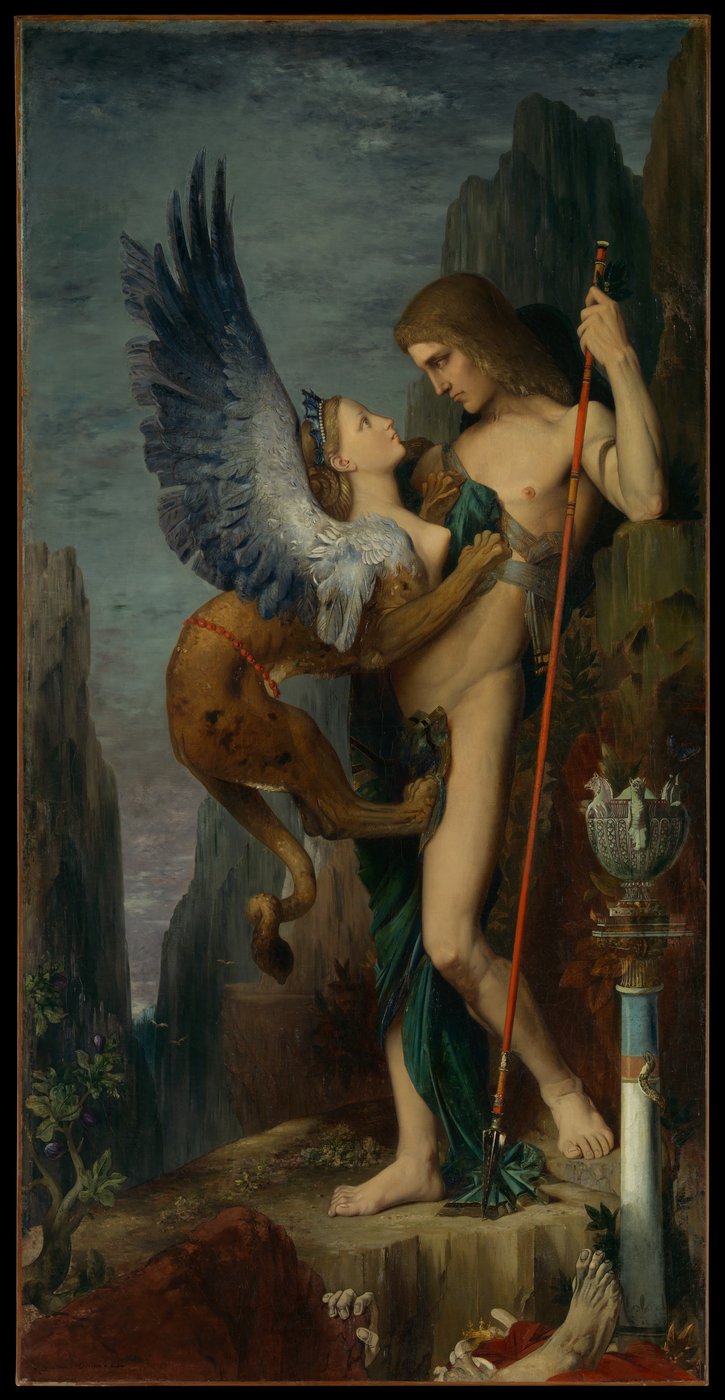
You enter the gallery and immediately drift to the margins, because the margins are where a picture starts to dream. What you notice first is the symbol inside the symbol: a mirror that reflects nothing, a flower that names a mood, the faint strange blue that sits behind an otherwise ordinary figure. You prefer small rooms, odd rooms, the upper floor with a low ceiling and a window, the side gallery where a single work seems to be keeping a secret. Light is less a requirement than an atmosphere; you like the kind of dim light that lets the wall participate in the image.
You move in loops and returns, circling back to the same painting after twenty minutes because the second meeting is always different. You may copy a fragment into a notebook, taking notes as a way of staying inside the indecision a work seems to stage. You leave with a fragment and a question, less conclusion than a half-opened door. Friends describe your looking as private, associative, and a little musical, the sort who says "it reminds me of" twice before naming the painting. A sample museum day might start in a room of symbolist dreamscapes, move to a cabinet gallery of prints and drawings, take a long pause in a quiet sculpture court, and end in a darkened room where one painting is lit as if it had come in from a forest.
On Light and Shadow, you are not fixed but hover; shadow interests you because it is where suggestion begins. On order, you are impulsive — a sequence that is too tight feels like a lecture, and you prefer discoveries to itineraries. On solitude, you are firmly alone in your looking, or in a very small party of the like-minded, because the mood of a symbol dissolves when too many people speak. On the classical side, you lean strongly avant-garde, happy with ambiguous forms, emblems, and the freedom not to explain.
These are aesthetic leanings, not predictions; they describe the sort of museum hour in which your eye feels most at home, and they need not be proved outside the gallery. You tend to arrive without a plan and leave with a list of rooms you did not quite reach, as if the museum were a garden whose paths you prefer to revisit in memory. You notice the way a single object can set the key for an entire wall: a bird in a corner, a draped hand, a door left slightly ajar.
You are drawn to works that withhold their subject, that ask you to dwell in the space between what is shown and what is hinted. When a painting is fully explained by its label, you feel a small loss, as though someone had told you the end of a story before you had begun. You like the company of other quiet visitors who understand that a room can be held in a kind of respectful silence, and you may exchange a glance with a stranger over the same ambiguous figure, both of you leaving without needing to resolve it out loud.
Suggested public-domain artwork mood
Curator’s Structural Note
Unusual proportions and a cool-to-warm mix around 3500–5000 K can function as secular aids, giving suggestion a frame without pretending to read the person. Attention Restoration Theory (Kaplan 1995) supplies language for why small, odd rooms can feel "away" and "softly fascinating"; it is a viewing aid, not a clinical tool. Keep the dream in the art, not in claims about you.