Today’s artwork · Art Notes
Soap Bubbles
Art Note
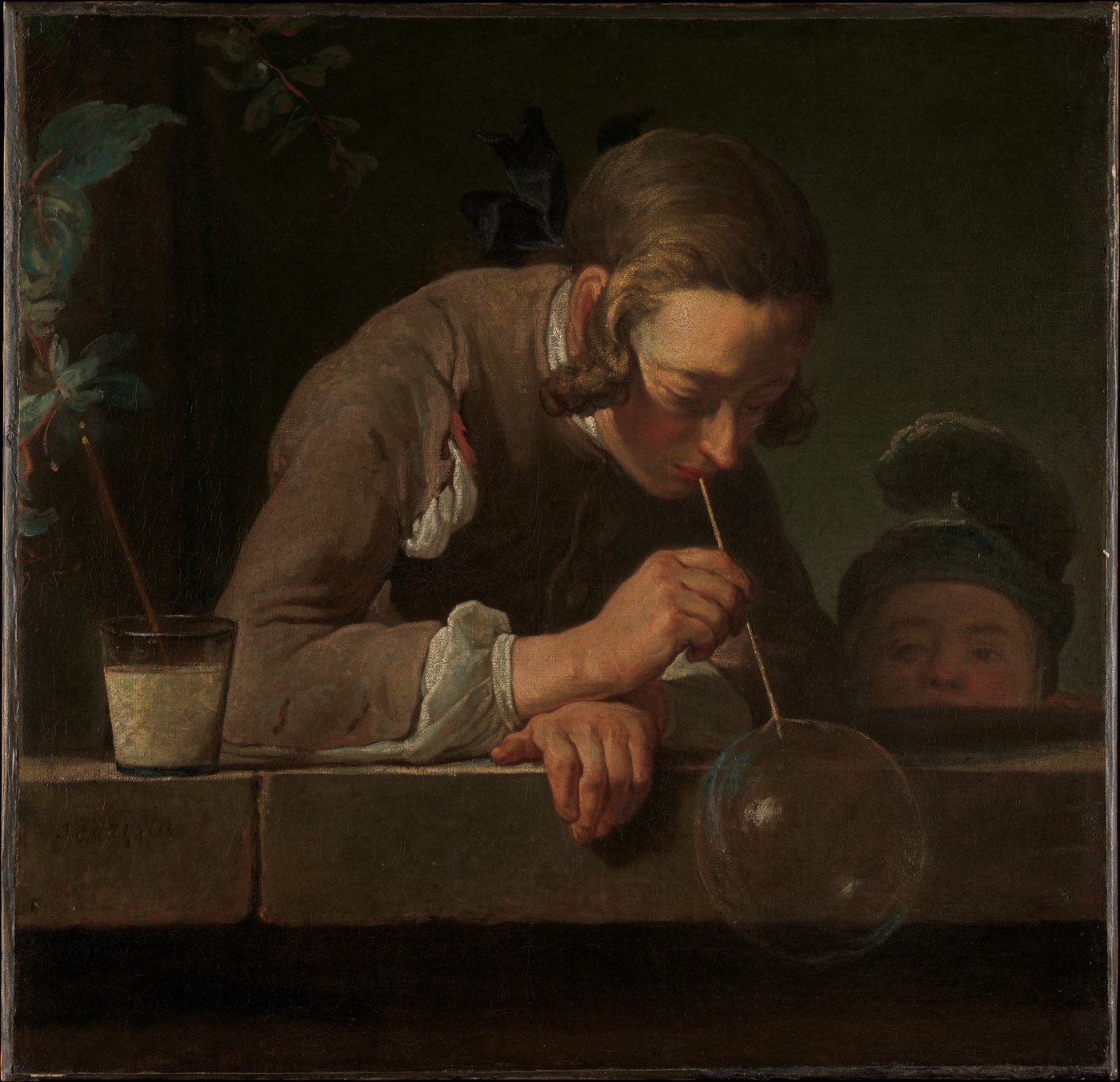
Chardin keeps the drama small: a dish of soapy water, a straw, a bubble that will not last the length of a sentence. The light is north-window cool, the palette a careful grey-brown, and the whole scene feels like a lesson that refuses to lecture. Look at the edge of the bubble — that is where the painting spends its care.
Nothing here predicts a day or diagnoses a mood. It is a public-domain invitation to notice how a fleeting sphere can hold a room’s entire attention.
Looking with Chardin
Jean Siméon Chardin painted ordinary concentration. In Soap Bubbles, a youth leans toward a sphere that will vanish before the viewer finishes a sentence. The Met’s Open Access file lets us study the cool north light on the glass, the careful grey-brown of the wall, and the thin bright rim where the bubble meets air. Chardin’s still lifes and genre scenes often treat looking itself as the subject: how long can attention hold something that refuses to stay?
Soap was a common seventeenth- and eighteenth-century emblem of vanity and brevity, yet Chardin refuses the sermon. There is no pointing finger, no moral cartouche. The drama is optical. Notice how the dish anchors the lower edge, how the straw draws a diagonal, how the second figure — half in shadow — turns the scene into a quiet conversation rather than a solitary stunt. The painting rewards a second visit more than a first glance.
Provenance note
Object page: The Metropolitan Museum of Art, accession searchable as 435888. License: Open Access / CC0. Local file: assets/images/chardin-soap-bubbles.jpg, registered with SHA-256 in ASSET-REGISTER.md. The default site OG card is derived from this same CC0 image. You may download and share the museum’s file under CC0; we still recommend linking back to the Met object page so other readers can verify the work.
Gallery Light
The chip above uses public Meeus-style formulas for approximate solar ecliptic longitude and lunar age. It does not cast a chart, name a zodiac “sign as advice,” or claim seasonal luck. It only situates the idea of daylight — a small honesty layer for a site about looking. If the numbers feel technical, ignore them and stay with the bubble’s edge.
From this picture to the quiz
Some visitors linger on temperature and hush; others want narrative myth or salon sparkle. The Art Personality Quiz asks ten short preference questions about those habits and returns a museum-goer archetype with an essay and a share card. Try it when you finish looking. Or return tomorrow: Soleilx rotates featured public-domain works and keeps the same quiet rules — educational appreciation, no forecast, no medical claim.
Look closer
What holds your eye longest — temperature, scale, or stillness? If you want a small mirror for that habit, try the Art Personality Quiz.