The Structural Classicist
You love a picture that behaves like architecture and a room that behaves like a promise.
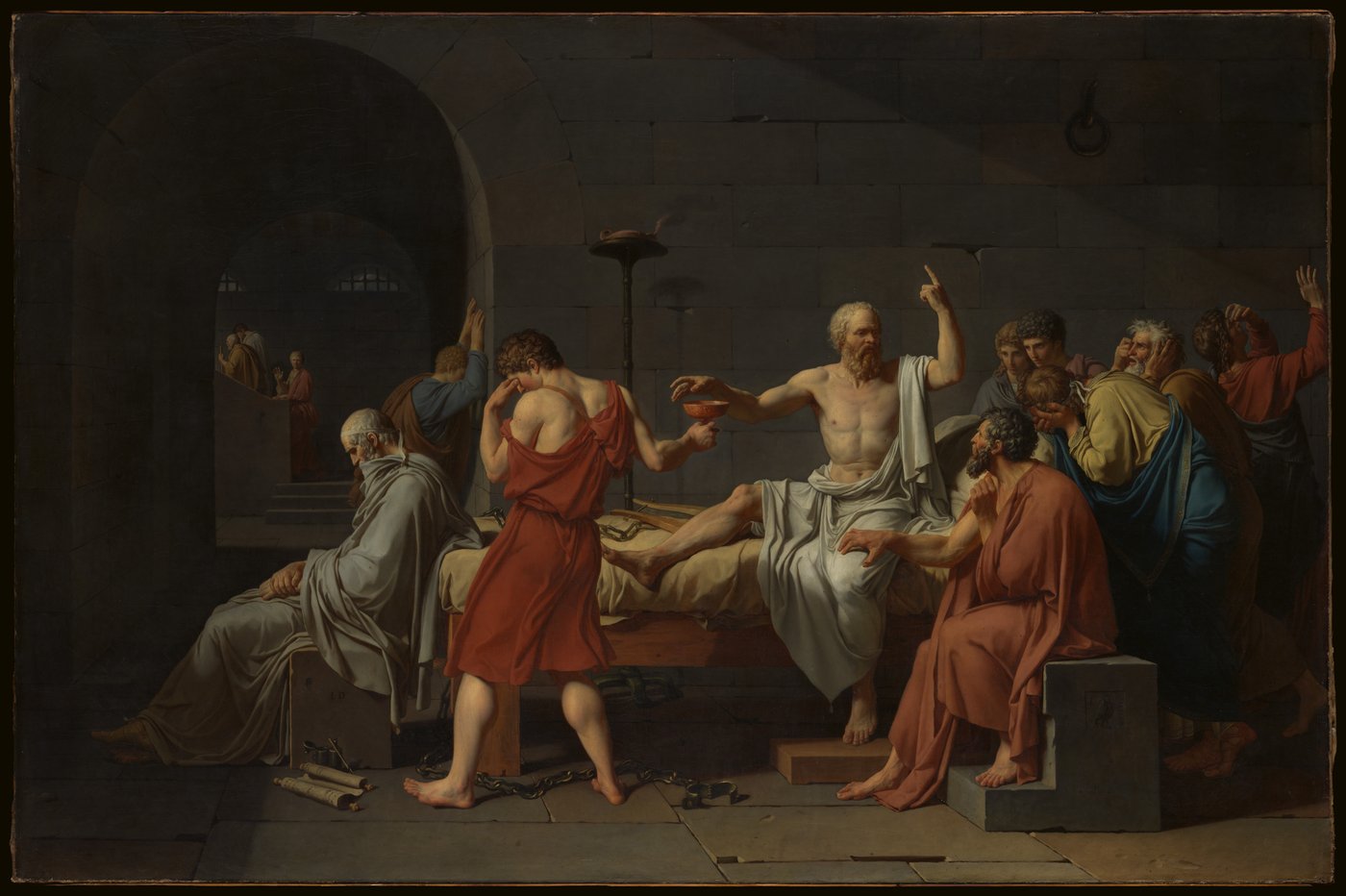
You enter a gallery and immediately, quietly, you assess the room: the height of the line, the intervals between frames, whether the whole thing has a spine. What you notice first is the geometry of a scene — a low horizon, a triangle of figures, the way a shadow square sits inside a rectangle — and the geometry of the wall around it. You prefer rooms with legible order, symmetrical hangs, generous cornices, and natural light that respects the frame. You move with a surveyor's calm: center, sidestep, align, look, move on.
You like the museum to feel like a well-argued sentence. You leave with a sense of proportion restored, as though the building and the paintings had quietly reminded you what planning could be. Friends describe your looking as composed and appreciative, maybe a touch instructional, the kind of person who points out that the bench is load-bearing and the hang is a kind of music. A sample museum day might begin with a room of 17th-century buildings and measured courtyards, move slowly through a sequence of portraits hung on a strict axis, avoid the most crowded temporary show, and end with a walk along a long axial gallery, stopping to count the doorways.
On Light and Shadow, you are neither committed nor opposed; you like a light that clarifies and a shadow that confirms rather than dramatizes. On order, you lean strongly positive: you find a clear plan restful, and even the museum map is part of the pleasure. On solitude, you are sociable but not dependent on the room's chatter; you can share a bench without needing conversation, and you are happy to explain a perspective line. On the classical side, you are fully to the older end, drawn to the vocabulary of columns, measured steps, and the calm of known forms.
These are aesthetic dispositions, not verdicts on character; they describe why you leave such a room feeling that the world had briefly regained its proportions. You tend to notice the frame before the face, the molding before the gesture, because you trust that a good frame is a kind of promise kept. You appreciate a room where the sight lines are unobstructed and the hung works seem to acknowledge one another across the wall. When a picture has been hung slightly off-axis, you feel it before you can name it, a small disturbance in an otherwise pleasant order.
You are not fussy for its own sake; you simply find that a clear sequence frees the eye to consider the harder question of what the painting actually does. You may count the steps between doorways, measure the distance between two portraits in your stride, and find this a form of attention rather than distraction. If the museum offers a plan, you read it with real interest, not as a way of hurrying through but as a way of understanding the building's argument. You like the way a well-proportioned room teaches the body to stand still, and the way a well-built picture teaches the eye to move in measured steps.
You leave with the quiet satisfaction of having been in a place that kept its word, and with a stronger sense of how form can be a form of care.
Suggested public-domain artwork mood
Curator’s Structural Note
A golden-ratio grid and a neutral 4000–5000 K color temperature can serve as secular aids for reading a room's proportions and a painting's internal frame. Attention Restoration Theory (Kaplan 1995) offers a vocabulary for "coherence" and "compatibility" in rooms that keep their promises; this is an aid to looking, not a clinical claim. Use it to notice structure, not to judge character.